
Mold Remediation Process
When mold appears in a home or business, many people assume it can simply be wiped away with household cleaners. In reality, mold problems often extend far beyond what is visible on the surface. That is why professional restoration teams follow a structured mold remediation process designed to fully remove contamination and address the moisture that caused it in the first place.
Mold thrives in damp environments and can spread quickly through porous materials such as drywall, insulation, and wood. Without proper treatment, spores may continue circulating through the air and settle in new areas, allowing the problem to return. The goal of remediation is not just to clean visible mold, but to identify the source of moisture, safely remove affected materials when necessary, and restore healthy indoor conditions.
Understanding the mold remediation process can help property owners know what to expect when professionals are called in. From inspection to final restoration, each step is designed to contain the problem, eliminate contamination, and prevent future growth.
Inspection and Moisture Detection
The first step is critical. Removing visible mold without identifying the source of moisture or determining where it may have spread often leads to the problem returning.
This step typically includes:
- Visual inspection of affected areas
- Identifying signs of water damage or leaks
- Using moisture meters and thermal imaging
- Determining how far mold has spread
Once the moisture source and affected areas have been identified, a remediation plan can be created and put into place.
Containment and Air Filtration
Before beginning to remove the mold and any materials, it’s extremely important to contain the mold and prevent spores from spreading. This is done with plastic barriers and sealed work areas. Using specialized equipment, negative air pressure is created. Then, HEPA air filtration is used to remove all spores from the air.
Removing Mold and Damaged Materials
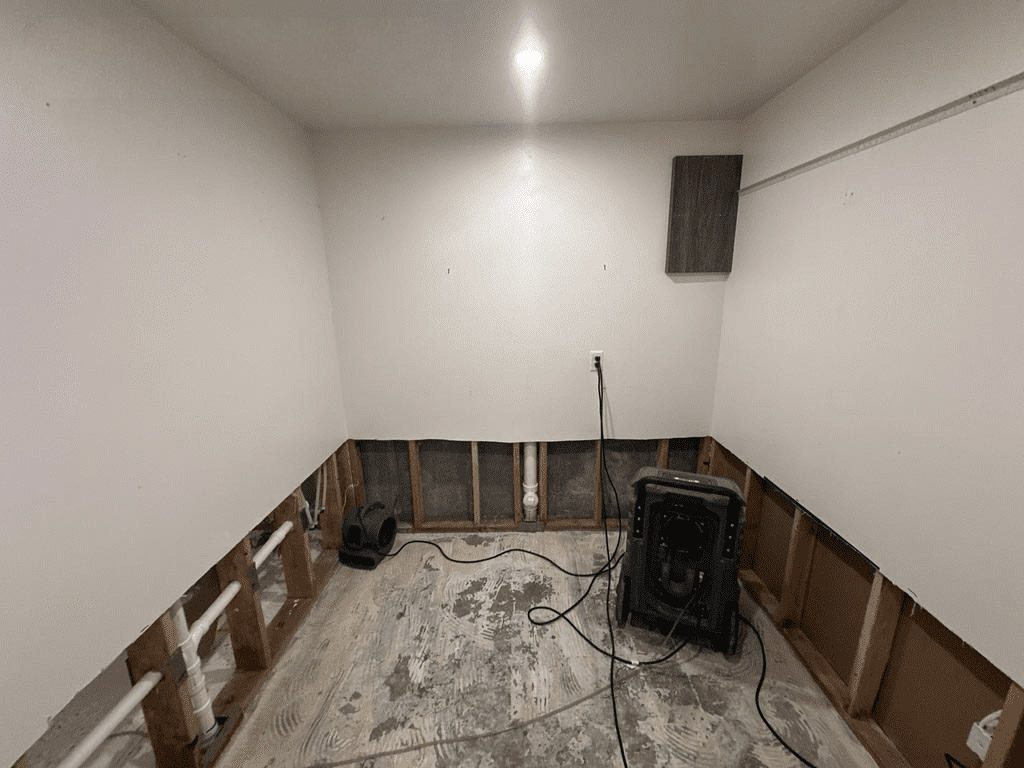
This is where the active remediation takes place. Non-porous surfaces affected by mold are carefully cleaned using specialized antimicrobial treatments. In some cases, porous materials such as drywall, insulation, or carpeting may need to be removed because mold can penetrate deeply into these materials and cannot always be fully cleaned. When removal is necessary, contaminated materials are handled and disposed of carefully to prevent spores from spreading to unaffected areas.
Drying and Preventing Regrowth
After all the mold has been removed, the focus shifts making sure the affected area is thoroughly dried. Even small amounts of leftover moisture can allow mold to return. Industrial air movers and dehumidifiers are used to remove remaining moisture from structural materials. During this stage, moisture levels are monitored by technicians to confirm the area has been properly dried. Addressing the original moisture issue and ensuring the space is fully dry helps prevent future mold growth.
Restoring the Affected Area
Once the area has been cleaned, damaged materials removed, and the space fully dried, restoration work can begin. This may include replacing drywall, flooring, insulation, or other materials that were removed during remediation. The goal is to return the space to a safe, functional condition while matching the surrounding materials as closely as possible.
Professional Mold Remediation You Can Trust
Dealing with mold can be stressful, especially when it affects the safety and comfort of your home. A thorough remediation process ensures the problem is handled correctly from start to finish. Rather than simply treating what is visible on the surface.
Professional restoration teams have the equipment and training needed to detect hidden moisture, contain contaminated areas, and safely remove mold from affected areas. Proper drying and preventative steps are also critical to help reduce the chances of mold returning in the future.
True Restore provides experienced mold remediation services designed to restore safe and healthy indoor environments. Our team uses professional inspection tools, containment systems, and advanced air filtration equipment to address mold problems thoroughly and responsibly. From the initial assessment to the final restoration work, we focus on clear communication and careful attention to detail.
If you find mold growth on your property, addressing it early can make a significant difference. Contact True Restore today at (208) 906-2423 or with the form below to restore your space with confidence.